
Table of Contents
Key Takeaways
- Red light therapy for your brain is a brain technology called transcranial photobiomodulation, or tPBM. It uses red and near-infrared light applied to your head to influence brain energy, brain blood flow, inflammation, and brain cell signaling.
- Near-infrared light is usually more relevant for brain health than visible red light because it penetrates deeper through the scalp and skull. Common brain photobiomodulation wavelengths used in studies include 810 nm, 830 nm, 850 nm, 1064 nm, and 1070 nm.
- The main target of red light therapy in your brain appears to be mitochondrial function. Red and near-infrared light may stimulate cytochrome c oxidase, improve oxygen use, increase ATP production, and support healthier brain cell function.
- Human studies suggest red and near-infrared light therapy may support cognitive performance, reaction time, mood, anxiety, sleep, traumatic brain injury recovery, and dementia symptoms. But the field is still developing, and red light therapy is not a cure for brain disease.
- Device quality matters. Wavelength, power output, fluence, pulsing, treatment time, target area, safety testing, and actual human clinical evidence are more important than marketing claims.
Red light therapy for your brain is not a nootropic supplement. It is a brain technology. And used correctly, it may be one of the most important tools we have for supporting mitochondrial energy production, cerebral blood flow, mood, memory, and brain repair (neurogenesis).
The technical name is photobiomodulation, which is often shortened to PBM. When red or near-infrared light is applied to your head, it is officially called transcranial photobiomodulation, or tPBM.
This is important because your brain is the most energy-hungry organ in your body.
Your brain uses about 20% of your body’s oxygen supply and energy, even though it is only about 2% of your total body weight.
Anything that safely boosts mitochondrial function, oxygen use, brain blood flow, and controls inflammation has huge potential to affect cognitive performance.
Now, don’t get me wrong. This does not mean red light therapy is a magical solution to all that can go wrong with the human brain. And it does not replace sleep, good nutrition, exercise, sun exposure, or a well-built nootropic stack.
Red light therapy is not an FDA-approved treatment for most brain issues, either. But the research on red light therapy and brain photobiomodulation has grown fast enough that it deserves a serious look at its potential.
In this review, you’ll learn how red light and near-infrared light therapy work in your brain, what the research says for cognitive performance, depression, anxiety, traumatic brain injury, dementia, Parkinson’s disease, and what to look for before buying a red light therapy device.
 What is red light therapy?
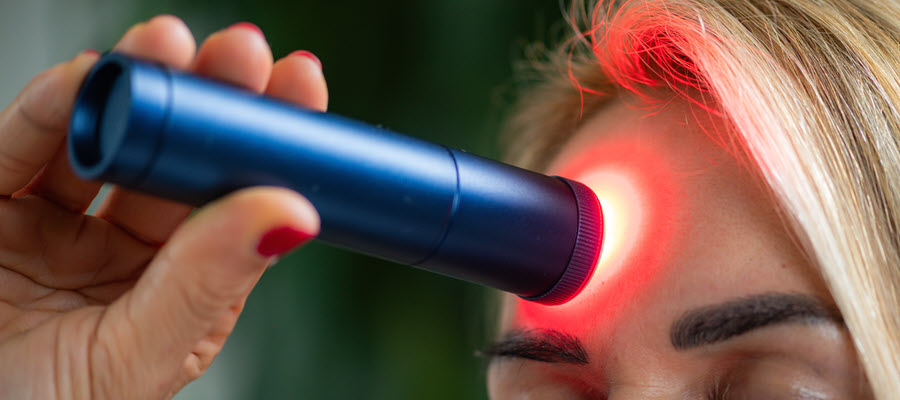
Red light therapy uses specific wavelengths of light to influence brain function. Most therapeutic red light devices use wavelengths around 620 to 700 nanometers.
Near-infrared light typically uses 780 to 1100 nanometers. Near-infrared is invisible to your eyes, but it can penetrate deeper into your brain than visible red light.
In skin and muscle, red and near-infrared light are used for healing wounds, collagen production, controlling inflammation, pain reduction, and overall recovery.
In your brain, the target is different. The goal is to deliver enough light through your scalp and skull to influence mitochondria, improve brain blood flow, reduce inflammation, and increase brain cell signaling activity and function.
You will see several names used for this technology:
- Photobiomodulation, or PBM
- Transcranial photobiomodulation, or tPBM
- Low-level laser therapy, or LLLT
- Low-level light therapy
- Red light therapy
- Near-infrared light therapy
You need to be aware that these terms are often not accurate in the marketing literature. In other words, a laser, an LED panel, an intranasal device, and a helmet can all be called photobiomodulation devices. But they are not the same thing.
Wavelength, device power, light strength or dose, light pulse rate, treatment time, and the area you target are all important. And critical to understand, depending on what you are using the device for.
How red light therapy works in your brain
The main target is chromophores in cytochrome c oxidase (unit IV in the mitochondrial respiratory electron chain).[i]
Chromophores are molecules that absorb or respond to specific wavelengths of light in mitochondria.
Cytochrome c oxidase helps move electrons through the mitochondrial respiratory electron transport chain to produce adenosine triphosphate (ATP), your main cellular energy supply.[ii]
 When your brain is under stress, nitric oxide can bind to cytochrome c oxidase and slow ATP production. Red and near-infrared light photons may help remove nitric oxide, improve oxygen use, and restore mitochondrial respiration.
This manifests as more ATP, better brain cell signaling, and a healthier response to oxidative stress.
Reviews of red light therapy devices often describe their effect on mitochondrial respiration, reactive oxygen species (ROS), nitric oxide, transcription factors, inflammation, and cellular survival.
This is the basic nootropic theory behind using red light therapy:
- Brain cells depend on mitochondria for energy.
- Near-infrared light can affect mitochondrial enzymes.
- Better mitochondrial function may improve brain energy production, blood flow, mood, and cognitive performance.
- Too little light may do nothing. Too much may reduce the benefit or cause problems. Once again, dosage matters.
This dose issue is critical. Red light therapy often follows a biphasic dose response.
Low to moderate doses can stimulate brain cell repair and energy production. Overdosing can be less effective or counterproductive.
This is one huge reason why device quality and how you use the device matter more than marketing claims.
Red light vs. near-infrared light for the brain
For brain use, near-infrared light is usually the more relevant part of the spectrum because it penetrates deeper than visible red light.
Many brain red light therapy clinical studies use wavelengths of 810 nm (nanometers), 823 nm, 830 nm, 850 nm, 1064 nm, or 1070 nm.
Red light around 630 – 660 nm may still be useful, especially when combined with near-infrared. But the deeper into your brain red light penetrates, the better near-infrared it is.
Some red light therapy devices combine red and near-infrared LEDs, such as 633 nm with 870 nm.
And some cognitive performance and depression studies used 810 nm, 823 nm, 850 nm, 1064 nm, or 1070 nm.
A full-body red light panel is different from a red light therapy device that is used for brain health. A full-body panel can help reduce inflammation, boost blood circulation, improve sleep, and support overall recovery. But the distance from your brain lessens its benefits.
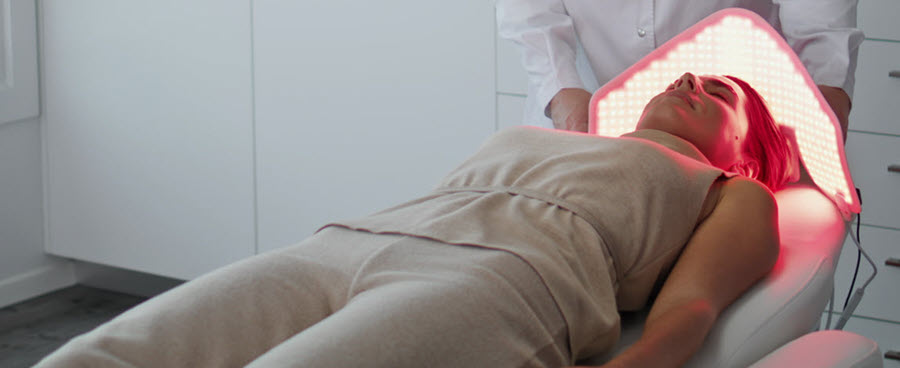
A red light therapy helmet, headset, intranasal unit, or targeted forehead device is designed to deliver light into your brain.
 Red light therapy brain benefits
Red light therapy for mitochondrial energy and mental fatigue
You cannot think well without energy. Neurons need ATP for membrane potentials (electrical signals), neurotransmitter release, synaptic repair, and neuroplasticity.
This is one reason mitochondrial dysfunction is linked with brain fog, depression, neurodegeneration, and poor recovery after traumatic brain injury.
A 2021 study conducted at the University of Texas at Austin did a randomized, sham-controlled study with 68 healthy younger and older adults, ages 18-85.
Sham-controlled means it was done with a plain light source rather than red light therapy.
The researchers used a red light therapy device (1064-nm wavelength) on the right anterior prefrontal cortex.
Study researchers reported that the red light device increased ATP production in all age groups. Including an increase in oxygenated hemoglobin, meaning it increases oxygen transport to the brain.
The study authors also noted that the benefits of red light therapy were more pronounced the older a study participant was.[iii]
Red light therapy for cognitive performance, memory, and reaction time
The best nootropic technology is one you can feel and measure, and that is safe to use every day and over the long term.
For red light therapy, human clinical studies are still in the early stages, but it is no longer speculation.
A 2019 meta-analysis published in Photomedicine & Laser Surgery included young and older adults and included 871 studies, 9 of which included healthy participants of all ages.
The meta-analysis concluded that red light therapy improved cognitive function in young and older adults.[iv]
Another 2016 study in the journal Neuroscience used red and near-infrared light stimulation in healthy adults. The study showed improved performance on tasks involving attention, memory, and mood compared with placebo.[v]
And a 2019 study published in the journal Lasers in Medical Science used near-infrared light (850 nm) stimulation over the right prefrontal cortex in healthy young adults. The study showed a significant improvement in reaction time.[vi]
The message we can conclude from these studies is that red and near-infrared light therapy is an especially interesting option as a nootropic device.
Instead of adding another nootropic to your stack, you are using a red light device applied to your prefrontal cortex, which improves reaction time, working memory, decision-making, and puts you in a better mood.
Red light therapy to reduce depression
322 million people worldwide suffer from depression. This means that 4.4% of the global population deals with depression, making it the most common cause of disability around the world.[vii]
The thing is that depression is not only about low serotonin. Brain energy levels, inflammation, oxidative stress, cerebral blood flow, neuroplasticity, and mitochondrial function also affect mood.
 And this is why red light therapy has attracted attention for mood disorders, including treating depression.
A study in 2018 at Harvard Medical School and Massachusetts General Hospital used a near-infrared light device on patients diagnosed with major depressive disorder.
The researchers concluded that red light therapy significantly reduced depression. It was a great option, especially for those who could not tolerate antidepressant medication.[viii]
A 2023 meta-analysis on using red light therapy for depression concluded that this device showed weak support for reducing depression.
But the study authors also noted that most of the clinical trials were either not long enough or used a device with insufficient power to affect depression. Light could not get into the brains of those evaluated for depression.[ix]
However, another study in 2019, conducted by Harvard Medical School, had patients suffering from depression use a near-infrared light device (830 nm) for 20 minutes per day for 8 weeks at home.
The study concluded that near-infrared light therapy significantly reduced depression. And it was a promising therapy for managing major depression.[x]
That last study is important. Because it has been proven that near-infrared light therapy may help reduce depression. But device selection and how long you use the device are critical.
A low-power red light therapy device or poorly designed protocol is not enough for treating depression.
Red light therapy for anxiety and stress
A 2019 clinical study recruited 15 patients with anxiety for an at-home study using a near-infrared light headband (830 nm) for 8 weeks. Study participants used the device daily for 20 minutes.
The patients reported a significant anxiety reduction. The study authors said that near-infrared light was “a promising alternative treatment for General Anxiety Disorder.”[xi]
This study was small, but it supports the idea that improved mitochondrial function, better prefrontal cortex regulation, less inflammation, and better sleep can all influence anxiety. All addressed by using a near-infrared light therapy device for a short period of time every day.
Red light therapy for Traumatic brain injury and concussion
Traumatic brain injury is one of the strongest areas of interest for brain photobiomodulation because it often involves mitochondrial dysfunction, inflammation, poor blood flow, sleep disruption, mood changes, and cognitive impairment.
 Several universities in the US Southwest collaborated to do a study using red/near-infrared light therapy for treating traumatic brain injury (TBI) in veterans
12 military veterans diagnosed with chronic TBI received pulsed transcranial red/near-infrared light using two neoprene therapy pads containing 220 infrared and 180 red LEDs.
The vets used the device 3-times per week for 20 minutes daily over 6 weeks. A SPECT analysis showed a significant increase in cerebral blood flow in 8 of the 12 veterans.
The researchers concluded that red/near-infrared LEDs show promise in improving cognitive function and better brain blood flow several years after TBI.[xii]
In 2024, a meta-analysis published in the journal Frontiers in Psychology analyzed 131 articles and 6 clinical studies on using red light therapy for treating traumatic brain injury.
The analysis concluded that red light therapy increased the volume of gray matter, improved brain blood flow, brain connectivity, and cerebral oxygen, which improved brain function.
The study authors said the findings were encouraging and enough to warrant further investigation using red light therapy for treating traumatic brain injury.[xiii]
Red light therapy for Dementia and Alzheimer’s disease
Alzheimer’s disease and dementia involve impaired energy metabolism, oxidative stress, inflammation, reduced brain blood flow, amyloid and tau accumulation, synaptic dysfunction, and loss of brain cell connectivity.
Red light therapy is being studied because it touches several of these pathways at once.
A 2021 clinical study published in the journal Aging and Disease reported that transcranial near-infrared light therapy improved cognition in patients with dementia.
Dementia caregivers also reported better sleep, mood, energy, and daily routine after red light treatment.[xiv]
Another 2026 study conducted at the University of Johannesburg in South Africa reported that red light therapy is a promising but still experimental approach for Alzheimer’s disease and other brain disorders.
It is not a cure for dementia. But it is one of the more interesting non-drug approaches because it targets brain cell energy production, cerebral circulation, inflammation, and neural function.
Red light therapy for Parkinson’s disease
Parkinson’s Disease research still uses animal studies, reviews, case reports, and some human studies. The main theory is that red light therapy may support dopamine neurons by improving mitochondrial function, lowering oxidative stress, and reducing neuroinflammation.
A 2024 review of red and near-infrared light therapy for Parkinson’s describes it as a promising, noninvasive, and affordable technology for the disease, while also noting that the field needs more standardized clinical trials.[xv]
For now, Parkinson’s disease should be treated as an emerging research area, not a proven consumer-device claim. Any company claiming its device treats Parkinson’s should be able to show human clinical data, not only testimonials.
Does red light therapy actually penetrate the brain?
The most common objection is, can light really get through the hair, scalp, and skull?
The answer is yes; some light can penetrate. But the amount that reaches through your skull depends on wavelength, power, area being treated, hair, skull thickness, device contact, and whether the device uses LED or laser light.
Near-infrared light penetrates better than red light. Hair blocks light, and bone scatters light. The amount of light at your scalp is not the same as the amount of light that reaches your cortex.
You should be skeptical of marketing claims such as “our panel heals your brain.” It may help with inflammation and sleep, but not for directly affecting your brain.
When shopping for a light therapy device for brain health and cognition, look for one that is designed for transcranial use with the wavelength clearly stated, power level, treatment time, how often you need to use it, and if it has been tested for safety.
Best red light therapy device for the brain: what to look for
I am more interested in a device’s specifications than its marketing claims. Before I use or recommend a brain red light therapy device, I want to see its fluence, because your skull acts as a thick, physical barrier that reflects, absorbs, and scatters light.
 Wavelength: for brain use, look for near-infrared wavelengths that are used in studies, such as 810 nm, 830 nm, 850 nm, 1064 nm, or 1070 nm.
Red wavelengths such as 633 nm or 660 nm may be useful, but only if they are combined with near-infrared wavelengths.
Wavelengths like 810 nm and above are in the “optical window” where human tissue and bone are at their most transparent, allowing maximum depth penetration into the cerebral cortex.
Dosage information the company must publish:
- irradiance (measures light intensity in milliwatts per square centimeter (mW/cm²)). It decreases with distance from the device. This is more critical if you are standing in front of a red light panel because the distance from the light is greater.
- fluence (device’s power output and the time you spend using it). The equation looks like this: Fluence (J/cm²) = [Irradiance (mW/cm²) × Time (seconds)] ÷ 1,000. For example, if a panel has an irradiance of 50 mW/cm² and you use it for 400 seconds, the calculation is (50 × 400) ÷ 1,000, resulting in a total fluence of 20 J/cm² delivered to the surface of your skin.
Beware of red light device power claims
There is a rapidly growing number of red light therapy devices advertised, and you need to know how to spot fakes when searching for a device.
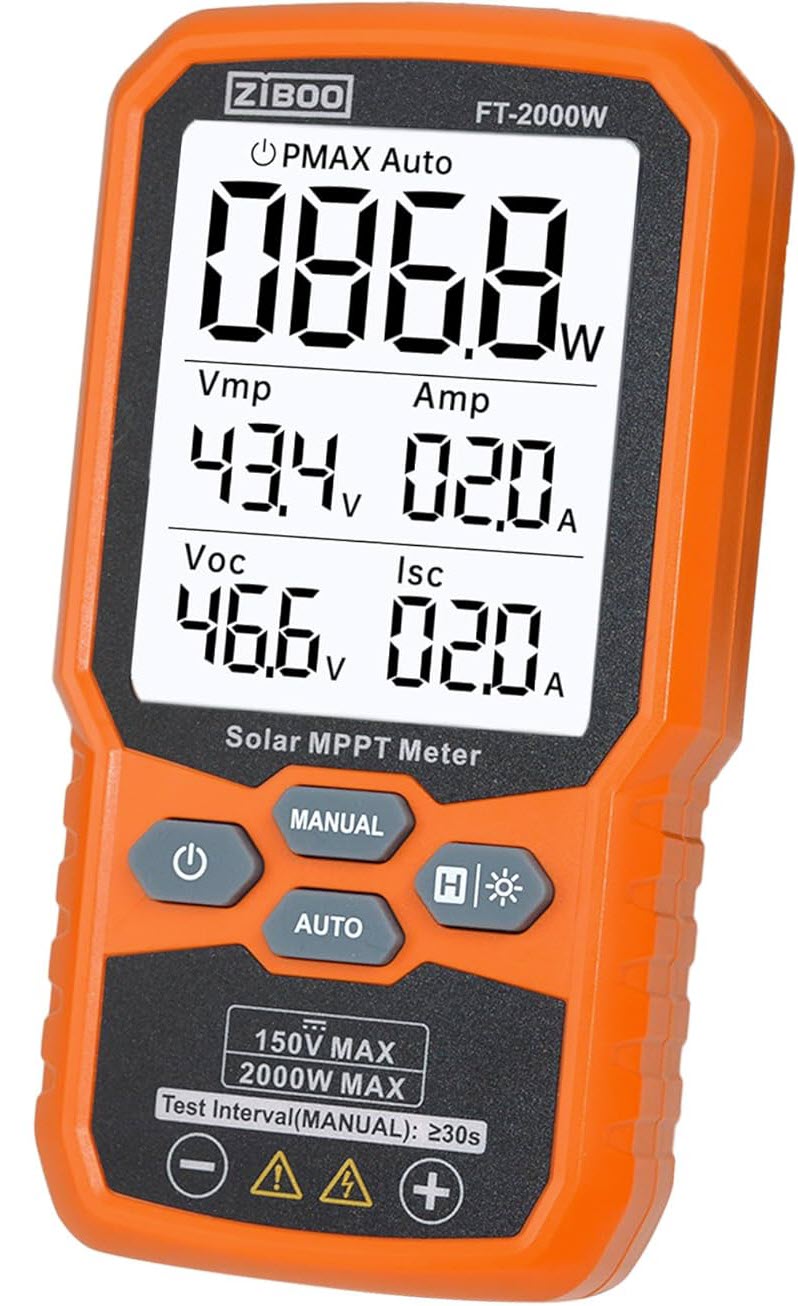
Many brands often inflate their irradiance numbers (i.e., claiming 100+ mW/cm²) because they measure power output using cheap solar power meters. These meters produce technical errors that overestimate LED power by up to 2x to 3x the actual amount.
If you use these fake numbers in your surface math, you will severely underdose yourself because your actual light dose will be much weaker than calculated.
How to identify a real claim. Check the company’s website or user manual for a link to a downloadable PDF report from a third-party testing lab.
Look for specs that are measured with a spectroradiometer or an integrating sphere, which is the gold standard tool for measuring true optical power.
If they cannot provide a 3rd party lab report, their power numbers are guessed or faked. If they hide the numbers, do not buy the device. Continue to search for the real thing.
Red light therapy terms you will encounter
Targeting: forehead, whole-head helmet, intranasal (inserting into your nose), or combined designs should be clearly explained.
Heat control: Red light therapy or photobiomodulation devices must manage heat safely so you do not burn your skin.
Eye safety: Near-infrared therapy devices use invisible light. You still need to protect your eyes and follow the manufacturer’s instructions. Near-infrared devices will harm your eyes if designed incorrectly or if you do not use eye protection.
Clinical support: Human clinical studies using the actual device you are considering are best. Studies using “similar wavelengths” can be useful, but not the same as device-specific evidence.
Protocol realism: A device you will use consistently is better than an impressive or more expensive device that is inconvenient or difficult to use.
Build quality and customer support: Red light therapy devices need clear instructions, safe and tested electronics, a good warranty, and excellent customer service. If the company does not offer all four, then find another device.
How to use red light therapy for your brain
There is no universal protocol that works for every device and every person. The safest approach is to follow the manufacturer’s recommendations and start slowly.
In clinical studies, sessions often range from a single treatment to 20 to 30 minutes per session, several times per week, for 4 to 12 weeks. Wavelengths and doses vary widely.
That variation is one reason I do not recommend copying a clinical study protocol unless your device is built to match it.
I highly recommend using the device exactly as the device manufacturer suggests for the first 2 to 4 weeks.
Keep notes on your sleep quality, mood, brain fog, memory, reaction time, and headaches.
Do not increase session length just because more sounds better. This is no different than any other nootropic. More is never better.
Do NOT shine near-infrared light directly into your eyes unless the device is specifically designed and tested for ocular (eye) use.
Stop if you get headaches, agitation, eye discomfort, sleep disruption, or skin irritation.
Use it earlier in the day if evening sessions interfere with your sleep.
The goal is better brain function. As with nootropics, the best dose is the one that delivers benefits without side effects. The same principle applies to red light therapy.
Who should avoid red light therapy?
Red and near-infrared light therapy is well tolerated in most published brain clinical studies, but well tolerated does not mean that it is risk-free.
Speak with your doctor first if you have epilepsy, active cancer, a history of mania, a recent brain injury, implanted electronic devices, eye disease, photosensitivity, or if you use medications that increase light sensitivity.
If you are pregnant, you should talk with your doctor first before trying a red light therapy device.
Do not use a red light therapy device over your thyroid, eyes, active tumors, or damaged skin unless the device instructions and your doctor say it is OK.
And do not combine multiple devices or stack excessive session times. Follow the device manufacturers’ directions!
 Red light therapy vs. sunlight
Sunlight is still the original full-spectrum light therapy. It supports vitamin D production, circadian rhythm, mood, and nitric oxide signaling.
Red light therapy is not a replacement for natural light.
But red and near-infrared therapy can do something sunlight cannot do.
Sunlight cannot deliver a controlled light wavelength to a specific area for a specific amount of time.
That is why red and infrared light therapy belongs in the brain technology category rather than the sunshine replacement category.
Nootropic Expert© on red light therapy for the brain
Red light therapy for your brain is one of the more credible non-drug brain technologies because the mechanism makes sense, and human clinical studies are ongoing.
It targets mitochondrial energy, brain blood flow, neuroinflammation, and neuroplasticity. Those are core pathways for memory, mood, mental energy, and brain repair.
While it is still early days, the science is ahead of many marketing claims. A company can use the phrase “clinically-backed” but not have any clinical trials on its own product. If they don’t, then find another device that does.
For nootropic use, I would put brain red light therapy in the same category as neurofeedback, binaural beats, tDCS, and sleep technology.
It can be useful when the device is well designed, and the protocol is not complicated. But it can’t cure everything, as some claim.
The best use case right now is if you want a device to support mental energy, mood, sleep quality, focus, or recovery, and are willing to track your results carefully.
But don’t expect miracles if you buy a cheap red lamp, point it at your head, and expect it to reverse a serious brain issue.
If you are looking for a red light therapy device for brain health, choose the device the same way you would choose a nootropic supplement.
Demand transparency, check the research, start low, track your results, and avoid companies that make disease-treatment claims without human clinical trial evidence.
Nootropics Expert© Recommendations
 I recommend red and near-infrared light therapy for cognitive function. And for all the reasons I detailed in my article above.
I have had the good fortune to use a Neuronic near-infrared light helmet for the last couple of months.
The benefits I have noticed include a better mood, more all-day energy, improved concentration, and sound sleep.
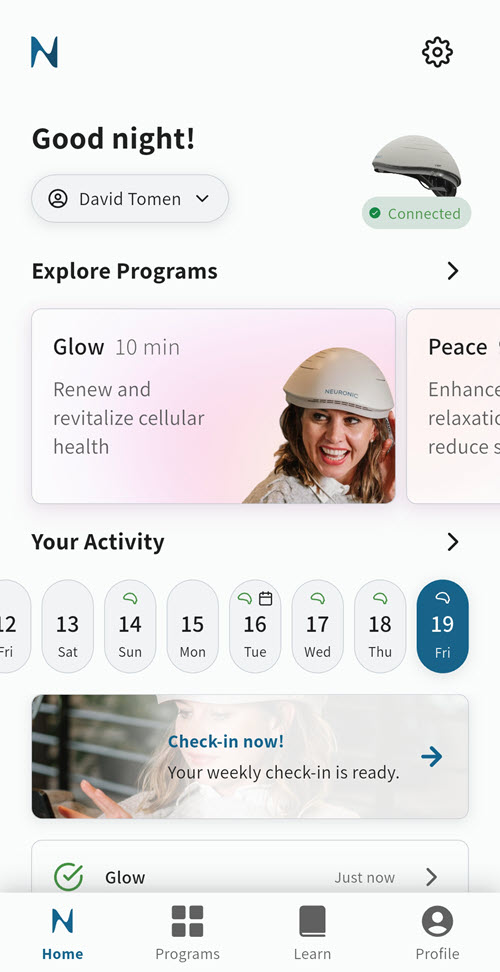 The Neuronic transcranial helmet uses a 1070 nm near-infrared wavelength, 1725 mW power output, and it covers your entire head with a 670 cm2 surface area.
The Neuronic helmet works with a mobile app offering 3 pre-programmed options and the ability to design your own protocol. Including choices of power output and session timing.
The company has 3 completed human clinical trials for attention & memory[xvi], anxiety & depression[xvii], and COVID-19 brain fog.[xviii] Neuronic also has 17 planned studies, 13 ongoing studies, and over 210 research participants.
Neuronic offers a risk-free 90-day money-back guarantee, a one-year warranty, is HSA/FSA eligible, offers worldwide free shipping, and is classified by the US FDA as a medical device.
I use and recommend the Neuronic near-infrared light helmet. You can see more, or buy it here: Neuronic red light therapy
Use my discount code for $100 off: NOOTROPICS



Join The Discussion - 2 comments
GARY LEVINE
June 26, 2026
Vielight is the leader in this field with respect to devices and research that is both completed/published and ongoing.Why no mention?
David Tomen
June 29, 2026
Gary, they are on my list to contact but I have not done so yet. Likely this week.