
Table of Contents
Lion’s Mane (Hericium erinaceus) is unique in the mushroom family both in appearance and function. Lion’s Mane Mushroom is extremely effective at stimulating Nerve Growth Factor (NGF) in the brain.
Known for its powerful effects as a “brain tonic”, Lion’s Mane is said to have been used as a tea for thousands of years by Buddhist monks. To enhance brain power and heighten their ability to focus during meditation.
Lion’s Mane, as a nootropic, is a powerful catalyst for brain cell regeneration, helping improve memory and cognition.
The primary active compounds in Lion’s Mane are hericenones and erinacines. Erinacines help your brain produce more Nerve Growth Factor. Erinacines easily cross the blood-brain barrier to boost the production of neurons.
Lion’s Mane helps:
- Nerve Growth Factor. Lion’s Mane Mushroom helps prevent and treat nerve damage in the brain. Once past the blood-brain barrier, Lion’s Mane stimulates the production of enzymes that release Nerve Growth Factor (NGF). Nerve regeneration helps relieve neurodegenerative disease symptoms such as Alzheimer’s, dementia, and Parkinson’s Disease.
- Neurogenesis. Lion’s Mane stimulates the repair and creation of neurons. Boosting neurotransmitters and signaling that affect memory, learning, recall, and mood.
- Brain Optimization. Lion’s Mane helps eliminate brain fog. Restoring memory and mental alertness. And improves anxiety and depression symptoms.
What is Lion’s Mane Mushroom?
Lion’s Mane (Hericium erinaceus) is a medicinal mushroom proven to benefit the brain, nerves, and immune system.
Unlike other mushrooms sporting a cap and stem, Lion’s Mane has long, flowing, white tendrils. Resembling a lion’s mane. Other names include Monkey’s Head, Bearded Tooth, Pom Pom Blanc, Hedgehog Mushroom, and Satyr’s Beard.
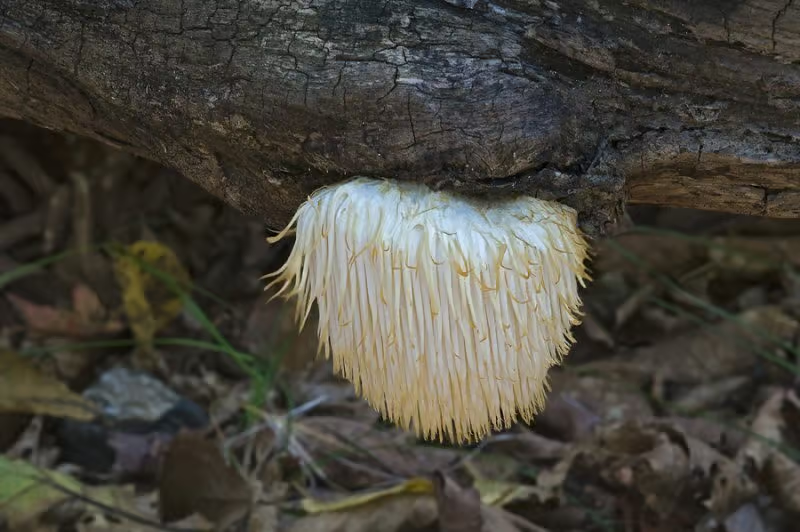
This parasitic fungus grows hanging off logs and trees. It is native to North America, Europe, and Southeast Asia. In Japan, it’s called yamabushitake or “those who sleep in mountains”. Referring to the Shugendo sect of hermit monks and their long, flowing robes.
As a nootropic, Lion’s Mane has been shown to be particularly effective in stimulating Nerve Growth Factor (NGF) in the brain.
NGF is produced in the hippocampus throughout life. Modulating cholinergic receptors and neuroplasticity.[i] And is essential for learning.
Nerve Growth Factor is a special protein that helps regenerate neurons. Lion’s Mane contains two unique classes of NGF’s – hericenones and erinacines, which easily cross the blood-brain barrier.
Lion’s Mane, like other medicinal mushrooms, contains high amounts of the antioxidant beta-glucoxylan, as well as four other polysaccharides and polypeptides. Having a significant impact on enhancing your immune system. And decreasing tumor growth.
Lion’s Mane has also been studied for its potential to reduce amyloid plaques. These clumps of beta-amyloid proteins block signals between neurons. They are implicated in Alzheimer’s and other neurodegenerative diseases.
Lions’ Mane is also used to treat Lyme’s Disease and digestive tract issues.
Here we’re talking about Lion’s Mane Mushroom and its effects on brain health and chemistry.

How does Lion’s Mane Work in the Brain?
Lion’s Mane boosts brain health and function in several ways. But two in particular stand out.
- Lion’s Mane Mushroom stimulates the synthesis of Nerve Growth Factor (NGF). NGF is a protein that plays a major role in the maintenance, survival, and regeneration of neurons.
NGF is required by your brain to keep neurons strong and healthy. When various neurological disorders occur, your brain is unable to produce its own internal source of NGF.
In a study done in Kuala Lumpur in 2013, scientists showed that Lion’s Mane extract induced NGF synthesis and promoted neurite outgrowth.[ii]
- Lion’s Mane is effective in reducing anxiety and depression. Some even call it the “smart mushroom” for its ability to improve cognition, memory, and act as an antidepressant.
A study by researchers in Japan worked with 30 women. The female subjects had been complaining about menopause, depression, sleep quality, and other issues.
The women were randomly assigned to receive Lion’s Mane-laced cookies or a placebo for 4 weeks. The researchers found that Lion’s Mane “has the possibility to reduce depression and anxiety, and these results suggest a different mechanism from the NGF-enhancing action of H. erinaceus”. [iii]
How things go bad
Science once believed that the brain could not grow new brain cells. Once our brains develop during childhood and we reach adulthood, we have all the brain cells we’ll ever have.
Now we know that neurons can regenerate. But that doesn’t mean they will regenerate. A number of health issues can contribute to neurodegeneration.
↓ Decrease in Nerve Growth Factor = Decrease in Long-Term Potentiation affecting long-term memory[iv]
↓ Brain cells die and are not replaced
↓ Neuroplasticity declines, resulting in poor memory
↓ Neurotransmitters decline, resulting in anxiety, poor mood, and depression
All of these age-related changes are contributing factors to neurodegenerative diseases like Alzheimer’s, Parkinson’s, and others. And anxiety, depression, and mood disorders that affect quality of life.
Lion’s Mane benefits
At least a dozen peer-reviewed studies have been published on Lion’s Mane benefits to brain health since 1991. Dr. Kawagishi of Japan was the first to identify the properties of Nerve Growth Factor in Lion’s Mane Mushroom.[v]
In one double-blind, placebo-controlled trial, researchers in Japan worked with 50 – 80-year-old men and women. All suffered from mild cognitive impairment.
The trial subjects received four 250 mg tablets containing 96% dry powder of Yamabushitake (Lion’s Mane) three times a day for 16 weeks. The men and women were tested at 4, 8, 12, and 16 weeks.
In each testing period, subjects who had used Lion’s Mane showed significant improvements in cognitive scores. And their scores increased while supplementing with Lion’s Mane. But 4 weeks after stopping Lion’s mane supplementation, their cognitive scores decreased significantly.
The researchers concluded that Lion’s Mane Mushroom is effective in improving mild cognitive impairment.[vi]
How does Lion’s Mane feel?
You may not experience the effects of Lion’s Mane Mushroom supplementation immediately. But many users report a boost in mood and mental energy with continued use of Lion’s Mane.
 Some report that it increases depth perception. And an improvement in the sense of smell.
Others testify to improved decision-making, problem-solving, and learning. Likely due to Lion’s Mane’s ability to improve neuroplasticity.
The consensus is that Lion’s Mane Mushroom can lessen anxiety, reduce depression, and improve concentration.
Lion’s Mane Clinical Research
Lion’s Mane Mushroom has been used as a food and herbal medicine since ancient times in East Asia. And scientific research has reported that Lion’s Mane promotes Nerve Growth Factor in petri dishes, as well as in animal and human test subjects.
Lion’s Mane Prevents Cognitive Dysfunction
In this study, researchers examined the effects of Lion’s Mane on amyloid β(25-35) peptide-induced learning and memory deficits in mice. The amyloid β(25-35) peptide is implicated in diseases such as Alzheimer’s.
Mice were injected with the peptide on days 7 and 14 of the trial. And they were fed a diet containing Lion’s Mane for 23 days of the experiment. The results showed that Lion’s Mane prevented the short-term and visual recognition memory reductions normally induced by the amyloid β(25-35) peptide.
They concluded that Lion’s Mane Mushroom “may be useful in the prevention of cognitive dysfunction”.[vii]
Lion’s Mane Induces Nerve Growth Factor
In this trial, mice were fed Lion’s Mane 5% freeze-dried powdered extract for 7 days. Researchers found an increase in the level of Nerve Growth Factor (NGF) in the hippocampus of the mice. Concluding that Lion’s Mane “contains active compounds that stimulate NGF synthesis”.[viii]
Lion’s Mane Repairs Nerves
In this rat study, Lion’s Mane extract promoted neuronal regrowth after injury. Rats with gluteal nerve damage were able to walk again after consuming water containing Lion’s Mane extract.
The researchers concluded that Lion’s Mane regenerates damaged nerve cells. In this case, the reversal was so profound that the rats went from being totally disabled to walking again.[ix]

Lion’s Mane Dosage
Wondering how much Lion’s Mane to take? Dosing Lion’s Mane Mushroom depends on the extract’s strength.
For Lion’s Mane 10:1 extract (30% polysaccharide), the daily dosage is 500 – 1,000 mg taken 1 to 3 times per day. This means that if you choose a daily dose of 1,000 mg of Lion’s Mane extract, you should take 500 mg in the morning and another 500 mg at noon.
Other retail extracts of Lion’s Mane range from 300 mg to 3000 mg, dosed 1–3 times per day. Check the label and see what the manufacturer recommends. And when first using the supplement, start with the lowest dose and see how your body reacts.
Lion’s Mane Side Effects
Lion’s Mane Mushroom is non-toxic and considered very safe. So, very few side effects have been reported.
Some neurohackers report itchy skin from higher doses. Likely attributable to a boost in Nerve Growth Factor.
Lion’s Mane has been tested in animals, with no side effects or toxicity even at doses up to 5 grams per kilogram.
Best type of Lion’s Mane to buy
Lion’s Mane Mushroom (Hericium erinaceus), when used as a nootropic supplement, is usually offered as an extract. In powdered form, or in a capsule.
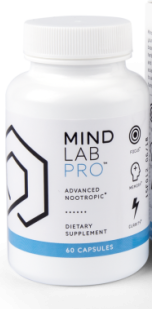 Lion’s Mane Mushroom can be found in some of the higher-quality pre-formulated nootropic stacks. For example, Click for Mind Lab Pro® contains 11 brain-enhancing nootropic compounds, including Lion’s Mane with the full fruit spectrum, including hericenones and erinacines.
I recommend Mind Lab Pro® because it addresses all aspects of anxiety resistance, memory, and cognitive enhancement, stabilizes mood, and promotes brain repair and maintenance.
This premium nootropic stack is designed to influence neurotransmitter levels, cognitive energy, brain waves, neuroprotection, and regeneration. See my Mind Lab Pro review for a detailed report.
When choosing a Lion’s Mane supplement, there’s debate over the best extraction method to achieve the mushroom’s full medicinal benefits. Some say your best option is a hot water extraction. Another says alcohol extraction. Another claims both are necessary.
But when it comes to mushrooms, saying that one is “more potent” than another is just too simplified to be true. This is as much an art as it is a science.
Much more important is choosing a supplement that includes Lion’s Mane Mushroom mycelium. In this mushroom, the fruiting body does not contain erinacines, which are compounds that boost Nerve Growth Factor (NGF).
The nootropic benefits of hericenones, found only in the mushroom’s fruiting body or top, help support your immune system and eliminate the Amyloid β(25-35) peptide implicated in diseases like Alzheimer’s.
The challenge is getting a Lion’s Mane Mushroom extract that contains the full spectrum found in both the mycelium and fruiting body. But the mushroom must be grown in liquid and not on a solid substrate like grain. Otherwise, you’ll get ground-up grain without the important erinacines needed for increased NGF.
Look at the manufacturer’s literature and marketing material and find out how their Lion’s Mane is grown. And read reviews on shopping sites and forums.
Types of Lion’s Mane available:
- Plain Lion’s Mane: Pure, powdered mushroom. Often freeze-dried and the cheapest form available. Can be added to water, juice, or smoothies.
- Lion’s Mane Extracts: A more potent form of mushroom. Often presented as 14:1 or 10:1 extracts (14 pounds or 10 pounds reduced to 1 pound of extract).
You will get 500 mg Lion’s Mane full-spectrum extract in Click for Mind Lab Pro®
If you want a standalone Lion’s Mane Extract, I recommend Real Mushrooms’ organic Lion’s Mane Extract
- Standardized Lion’s Mane: Processed to provide exact levels of active ingredients. You can get Lion’s Mane standardized to 30% and 50% polysaccharides (including the active secondary metabolites hericenones and erinacines).
- Lion’s Mane tea: Since this mushroom is popular in the kitchen, the taste is acceptable. But it’s hard to get a handle on how much of the active ingredient you’re actually getting.
- Amycenone®/PLM-Fraction: This “branded” product is standardized to 0.5% Hericenones and 6% Amyloban. It seems to target a lesser-known Lion’s Mane active ingredient–Amyloban–which is positioned as a mushroom compound that fights beta-amyloid proteins. Originating in Japan, it is extremely expensive and may be found in a supplement called Amyloban®3399.
And if you decide to pick your own, before consuming any wild mushroom, make sure that it is accurately identified. Mushroom poisoning is a real problem if you pick the wrong one.
For a full list of Mycology societies that may be able to help you, go to the North American Mycological Association website (www.namyco.org).
Nootropics Expert Recommendation
Lion’s Mane 500 – 2,000 mg per day
 I recommend using Lion’s Mane as a nootropic supplement.
Your body does not make Lion’s Mane on its own. So you need to take it as a supplement.
Lion’s Mane is especially helpful for regenerating brain cells. It prevents neurodegenerative diseases like Alzheimer’s and Parkinson’s.
And it boosts long-term potentiation for memory and mental sharpness. By stimulating Nerve Growth Factor.
Lion’s Mane also helps boost mood, tame anxiety, and relieve depression. For a better quality of life.
We suggest starting with a dose of 500 mg daily. The best human study used 3000 mg per day. But another researcher found that lower concentrations may stimulate NGF better than higher concentrations.[x]
Start at 500 mg per day and see how it works for you. If you don’t experience a benefit, boost Lion’s Mane in small increments of 250 mg per day until you notice an improvement. And make sure you are using a supplement containing mycelium and fruiting bodies grown in a liquid medium.
You can buy individual Lion’s Mane supplements. Or you could try my favorite pre-formulated nootropic stack, Click for Mind Lab Pro®, which includes the full spectrum, including hericenones and erinacines found in Lion’s Mane Mushroom.
Mind Lab Pro contains a synergistic blend of 11 brain-enhancing nootropics covering all aspects of cognition and brain health. See my full Mind Lab Pro review for more.
Lion’s Mane is a great complement to a nootropic stack that includes Aniracetam, CDP-Choline, and Omega-3s for an immediate cognitive boost.



Join The Discussion - 412 comments
James
March 2, 2024
This is kinda off topic but I was wondering which nootropics is not recommend to take with metformin ( antidiabetic drug). I notice some nootropics you cannot take with ssri meds but not so much with antidiabetic drugs except for lion mane and maybe rhidola rosea?
David Tomen
March 9, 2024
James, the only one I would avoid while using Metformin is Berberine because it works in the exact same way in your system.
James
February 26, 2024
Is Nootropics depot a good brand for lion mane and/or other nootropic products?
David Tomen
February 28, 2024
James, what I like about Nootropics Depot is the purity of their products. What is says on the label is what is in a capsule without toxic “other ingredients”.
James
March 2, 2024
Thank you. I was worried that their stuff was going to be subpar.
Catherine Carlisle Magee
February 4, 2024
SUCH, GREAT INFORMATION!
THANK YOU SO MUCH, Catherine Magee
David Tomen
February 5, 2024
Thank you Catherine!
Jorge D
January 27, 2024
Hi David, I like making mushroom cold brew coffees for myself which I store in my fridge for upto 5 to 14 days in batches. I was told that the healthy modules in mushrooms powder I use break down within a few days in water is this true.
David Tomen
January 27, 2024
Jorge, not sure about soaking mushrooms in water. But this study provides a good description on what happens when cooked with various methods: https://www.sciencedaily.com/releases/2017/05/170519083817.htm
Christy Smith
January 22, 2024
My son Diagnosed at 15 with chiari malformation. He is an extreme athlete. I make a lions mane extract that works much different than all others. It removed the syrinx within 3 days, no more headaches unless extreme intensive training, he now regulates, no vomiting, no nose bleeds, clear speech, minimal growing pains. There isnt any studies to date I can find. Is there a company that can test my extract so we can find out why it works so well. He does also regularly take Cordyceps with the lions Mane. I find that the Lions Mane Extract works symbiotically with Cordyceps but Cordyceps is not needed in my opinion for these results. What is you opinion? Where can I go to get this tested?
David Tomen
January 26, 2024
Christy, unless you want to spend a fortune I suggest forgetting about testing. Just be thankful your combo works. See this article to compare the benefits of nootropic mushrooms: https://nootropicsexpert.com/the-nootropic-benefits-of-medicinal-mushrooms/
Thomas
December 29, 2023
Hi David,
You mention here that it is important that lions main contains extract from the mycelium for cognitive benefit. You also recommend Real Mushrooms organic Lion’s Mane Extract. However they state that their product has “no added mycelium”. Could I check that you still recommend this product? Thanks
David Tomen
January 4, 2024
Thomas, that is a typo on their end.
Will
November 27, 2023
Hi David.
I just want to say thank you. I am so grateful for all the work and videos you do and have done. You have given me back some hope. You are very inspiring.
I would like to try Lions mane extract to help repair and regrow nerves that have been damaged. I am currently on sertraline (zoloft) 100mg a day. Would it be ok to take Lions mane extract 500mg to 1g a day as well as this medication?
Thank you
David Tomen
November 30, 2023
Will, Lion’s Mane Mushroom extract is not contraindicated with any med that I know of.
Andrei
October 25, 2023
Hi there!
I understand Lions’ Mane has been associated with lowering DHT (could be wrong since I didn’t see a study attached). Anectodally people have reported having a lower sex drive.
Do you know why that might be?
Thank you.
David Tomen
October 27, 2023
Andrei, I have seen zero evidence that Lion’s Mane Mushroom or its extract touches any of the sex hormones in men or women.